
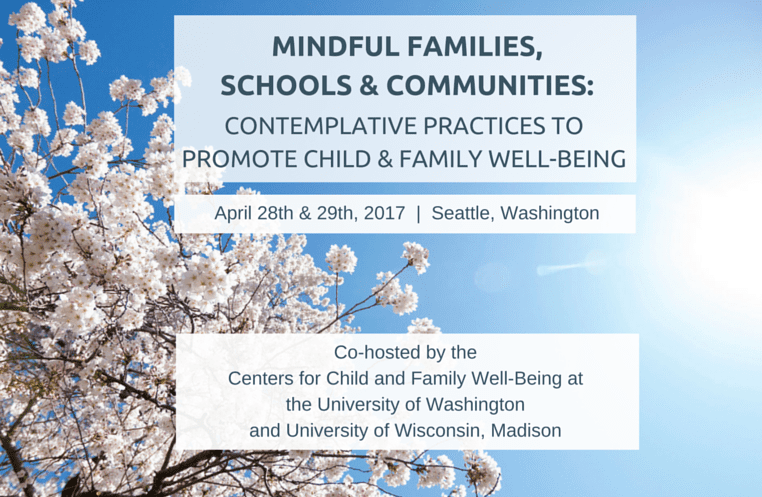
I spent the last two days at a Mindfulness Research Conference and my brain is full. I dreamt about mindfulness last night. Don’t ask me to describe it because it doesn’t make much sense, but trust me when I say it will be several days before all of the information I received filters down through the recesses of my brain and begins to create a clear picture. I was left with a tremendous sense of gratitude for all of the people who are doing such good work to uncover which practices and paradigms are the most effective. People doing work on a shoestring budget in the face of resistance to the idea that this is a science, in the face of challenges like racism and ablism and a culture that doesn’t embrace relationships between people as much as it embraces the power of money. More than once, I found myself breaking out in goosebumps as I listened to these brilliant, fierce, heart-centered folks present their work. Whew.

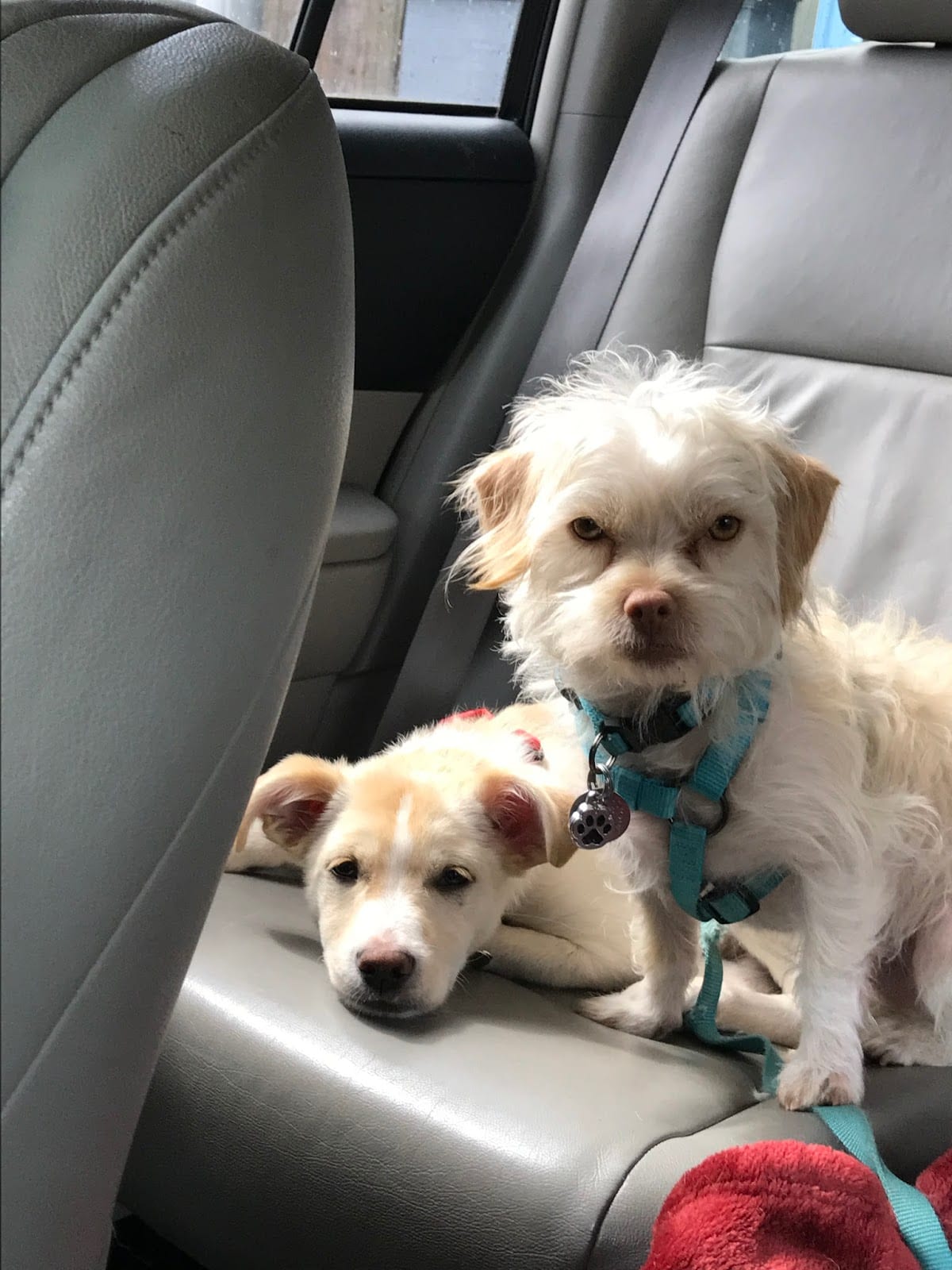
When I took the pups for a walk this morning before most of the rest of the neighborhood woke up, I had ample opportunity to quietly reflect on the last two days. I set out with the intention of simply paying attention to my surroundings, appreciating the flowers in my neighbors’ yards, the smell of the air after a hard rain last night, the sound of the birds talking to each other and their babies. It wasn’t long before I was distracted, however, which is akin to what happens sometimes when I sit down to meditate. Some people call it ‘monkey mind,’ but in this case, it was puppy mind. The dogs were pulling me in two different directions, each of them intent on tasting whatever they could – small sticks, bits of gravel, discarded wrappers and chewing gum they discovered on the ground. Over and over again, I tugged one back toward me with a harsh Leave It! I nearly laughed out loud when I realized that this is what I do to myself when my thoughts stray during meditation and I resolved to be more gentle. These puppies are doing what comes naturally to them – exploring their world with their mouths. Anger won’t change that. I can be more gentle in redirecting them (and simultaneously look forward to the day when I can take them for a walk and they will lift their heads up and look forward and walk smoothly instead of letting their noses lead the way in some winding treat scavenger hunt).
The actual events of the walk did not change with this realization, but my response did.

This is mindfulness. The recognition that there is a stimulus-response occurring and that I have the power to stretch out that hyphen between them, reflect on it a bit, and change the response to one that is more purposeful, more gentle, more positive without ever trying to change the stimulus.

As we rounded the next corner, I saw a neighbor up ahead walking to work. I didn’t want to shatter the quiet, so I just observed him as he walked into and then out of my field of vision. Once he had passed out of my sight, a small sedan came zipping down the street – going well over the speed limit – a young woman behind the wheel bopping her head to her music and peering in the mirror of her visor. I felt my blood pressure rise and lamented the fact that I was too far away from her to catch her eye and send her some kind of signal that she needed to Slow Down, for God’s sake!! My jaw clenched and my hands tightened around the leashes despite the fact that we were fully half a block from the street she had just raced down. I was furious.

Oh. Yeah. I was furious. This is mindfulness.

Noticing that word furious bouncing around in my brain, coupled with my physiological responses and the urge to dispel the tension in my hands and face and chest by yelling or flipping her off was enough to stretch out that hyphen space.

Stimulus                                       –                                        Response
Was I really angry? Yes.
Why? Fear.
The sudden appearance of this fast moving car on the heels of seeing my neighbor walk along that road sent my mind racing. As soon as I saw her driving quickly down the street, seemingly not paying close attention to her surroundings, I conjured up images of a horrible accident. My mind spun off into horrible scenarios: her not being able to stop in time for the crosswalk right in front of her; not even seeing a small child or pet racing across the street to catch a ball or chase a squirrel; crashing sounds, twisted metal, glass shattering on the roadway. 
Even though none of that happened, even though two blocks ahead of her was a stoplight that would surely be red this time of the morning, my conditioned response to fear of potential disaster was anger. 
Well, what about next time? She clearly didn’t learn anything this time. She’ll most certainly drive that quickly down this road again and maybe next time it won’t be fine. I wish I could catch up with her and tell her to pay more attention. 

I watched as my mind created stories about her – she was out after a long night of partying and had to race home before her parents noticed she was gone. She was an entitled rich kid (she was driving a fairly new Audi sedan) who only thought about herself. She was looking in her visor to put on her makeup instead of watching the road.
I nearly laughed out loud at the elaborate tales my mind created in order to sustain my anger response. This is mindfulness. 
All of this happened in the space of about 90 seconds but by remaining curious and separate from my thoughts and physiological responses, I was able to move through the fear and anger and gently redirect my mind back to the walk, the flowers and the quiet and the dogs who were now wrestling with each other on the wet grass at my feet. Instead of holding on to that tightness, elaborating on that story, striding home to tell my kids about the crazy person who sped down the street and nearly killed the neighbor this morning, I took a deep breath and let my shoulders drop. 
This is mindfulness. 
I may still sit today with my eyes closed and clear my mind for a while in formal meditation. But even if I don’t, I am reaping the benefits of mindfulness practice by doing my best to extend it to the other parts of my life where my stimulus-response mechanism can have enormous effects on my mood and the way I interact with others. I suspect this is only one of the ripple effects the last two days will have and while it is invisible to most people, it will certainly impact how I show up in the world. 

Expectations may be one of the biggest roots of all suffering. And yet…

Is it possible to be human and not have expectations? Can we really move through life without having some subconscious idea of where we’re going and what it might look like when we get there?

I have been thinking a lot about expectations lately. My life does not look like I expected it to when I was a kid. It doesn’t look like I expected it to when I was in college, or as a young adult, or even two years ago. My children are not doing the things I expected them to be doing, nor is my mom. Ultimately, that is both pleasant and sad. There are things going on in my life that are devastating and others that are so amazing and wonderful that I am grateful over and over again in any given week.

A big part of grief, I think, is letting go of that picture I had in my mind, realizing that life is not going to be the way I thought it was, and recognizing how much I rested in it, relied on it, planned for it and trusted it. I find it amazing how often I lend some weight and solidity to my expectations, even though they are merely schemes cooked up in my brain with no substance whatsoever. I can believe a certain thing so unquestioningly that I build entire systems on top of it and then spend overwhelming reserves of time and energy reworking those systems when the bedrock beneath them turns out to have been sand.

But in order to move forward, expectations are a requirement, aren’t they? Or am I confusing expectations with goals? Perhaps that’s it. Maybe I need to be more mindful of the difference between desire and assumption. Just because much of my life does go according to plan is not a reason to lull myself into thinking that all of it will. And it’s true that often, when things fall apart, I have some pretty amazing experiences that help me grow and become a better person, simultaneously, I’m holding expectations for other parts of my life.

Maybe it’s impossible to not assume that there will be certain givens in my life. Maybe, without those mental mirages, I wouldn’t ever bother to get out of bed. Maybe, as long as I can continue to recover from the loss of expectation, grieve for it and learn from it, it’s not a bad thing. Maybe this is just the way it’s designed to be. Our human brains crave coherence, predictability, structure. We want a story that makes sense, puzzles with all the pieces contained in the box. Most of us would choose a safe, complete scenario over one whose ending is altogether uncertain, and so we are built for expectations. And while I know the Buddhists say the trick is to not get too attached to them, that is sometimes a tall order (especially when we’ve crafted those stories in our minds so well we don’t even recognize them for what they are – stories). Maybe accepting the fact that we’re going to get attached to some of them and learning how to breathe and get curious and remain flexible when they fall apart is a more realistic plan. At least for me.

My friend and coach, Kris, posted something on her Facebook page yesterday that gave me pause. I watched it again this morning before taking the dogs for a walk and let it filter through my brain as we sidestepped puddles and admired the fat cherry blossoms and smelled the daphne perfuming the air.

Kris was talking about inspiration and how, sometimes, we sit and wait for inspiration to push us to action, and as we wait, we are frustrated and discontent. She wondered whether it is the discontent that is actually the source of inspiration, that if we take that first step toward action, the path will open up and we will begin to feel the motivation to continue. What if the frustration is the sense that there is a difference between what we say we want and what we are doing to get there, and that is actually the driving force, but our desire to wait for a clear sign to begin keeps us from doing anything?

Well, yeah, when you put it that way.

I have been feeling stuck a lot lately and as I walked and ruminated on Kris’ words, it struck me that I have been using that stuck feeling as an excuse not to change some things in my life that I can actually control.

I have long felt that I rely on wine and chocolate as crutches to make myself feel better, but since I am not overweight and I never get drunk, I haven’t sensed a reason to change my behavior.

But here’s the thing: when I indulge in those things in the evening, the narrative that goes through my head sounds a little something like this – I deserve this. It’s been a long day. Or – It’s a pretty small vice and I don’t do it every night. 


More often than not, the next morning, I shake my head at myself, wishing I hadn’t had that extra piece of Easter candy (damn you, Cadbury mini-eggs!), and sometimes I even go so far as to come downstairs and throw the remainder of the bag away. And I wonder what message I’m sending to my girls when they see me with a glass of wine almost every night.

The incongruence between what I say I want – to be mindful of food as fuel, to be active and physically healthy – and how I act is grating. And this shows up in other places in my life, too. I see in my Facebook groups that there are other writers who are getting their freelance work published once a week and I feel guilty – I should be out there hustling more work that is visible because the memoir I’m working on won’t see the light of day for a year or more.

Often, the way for me to get clarity on things like this is to let my mind create a picture, and this morning was no exception. I imagined myself standing on a beautiful beach, dazzled by all the little, shiny things dotting the sand. There are rocks polished by the surf, fully intact shells, smooth pieces of driftwood. I walk along and gather the ones that are the most intriguing to me, filling my hands and pockets and not really thinking about what I’ll do with them or where I will put them. I’ll figure that out later. Right now, they are a tangible sign of what I have – like publishing credits or a wine cellar that’s full. I feel the land beneath my feet and I am grounded. This is real. I can walk like this forever, back and forth.

But eventually, my hands are full and I’ve walked the length of the beach. And I realize that what I really want is to be out there, in the ocean, floating, being lifted and held and open to possibilities. When I’m in the water, that’s my inspiration, my true passion, my purpose. It is where I can be fully supported and I’m able to really get some perspective. When I float in the water, I can look back at all of the glittery gifts on the beach in their entirety and really discern which ones speak to me. I don’t have to gather armfuls of things just because they are lovely, I can truly choose the things that are congruent with the big picture of who I am and what I truly want. And I can come back in to the beach at any time, but when I remember that the floating, the be-ing is where I am most grounded, that it is here where I draw my inspiration, the beach seems like a place for occasional visits, not someplace to dwell and get caught up in the doing and the gathering.

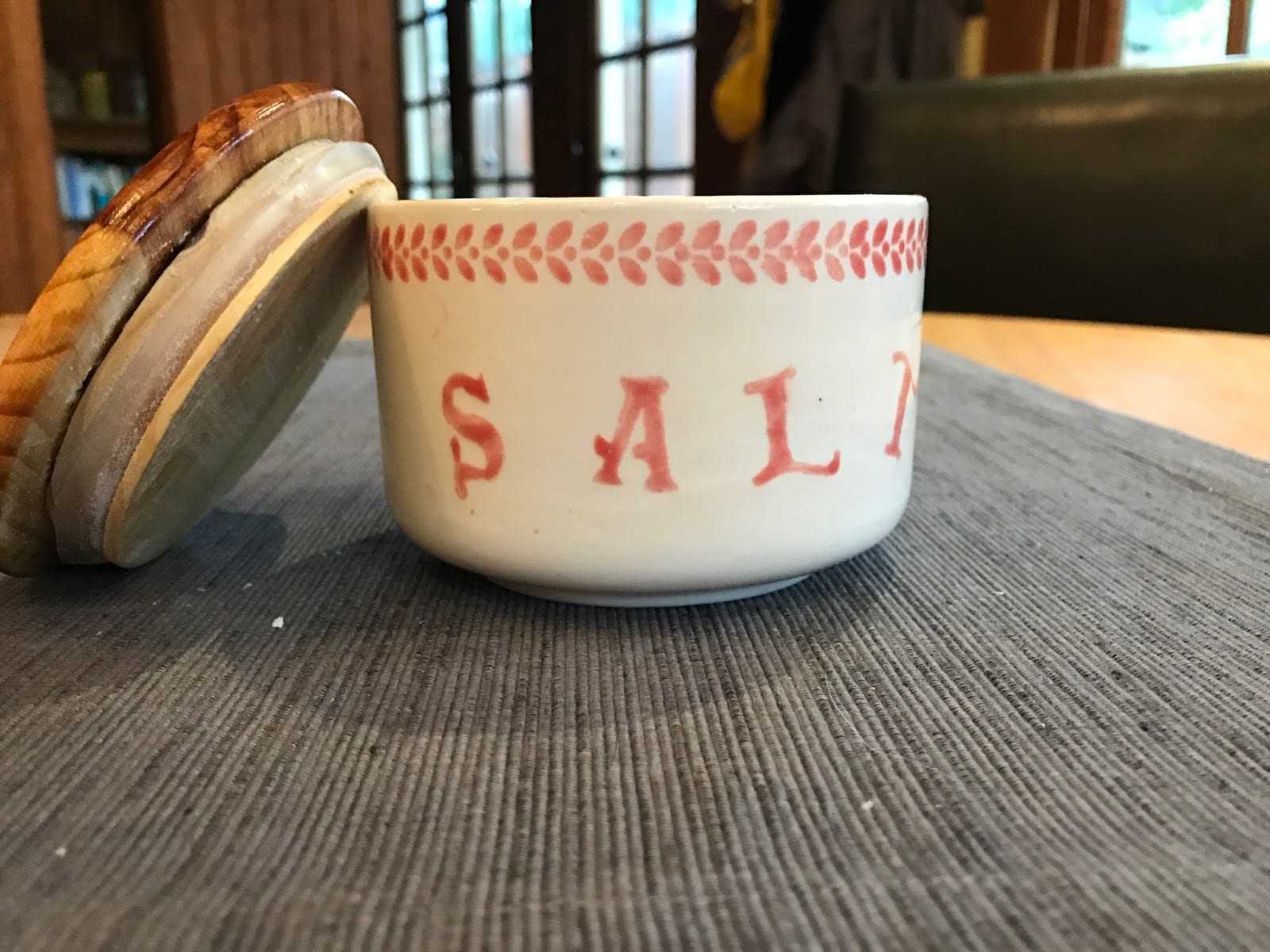
I fixed the salt cellar this morning. It wasn’t terribly
complicated, but it took a little bit of ingenuity and some focus and a real
desire to have it fixed. I made it last year at one of those paint-your-own-ceramic
workshops. Eve and I were having a mom-daughter day and I decided the last
thing our cupboards needed was another coffee mug, so I chose this ceramic salt
container with a rubber flange on the lid to keep it air tight and Eve pronounced it “cute,” which is an enormous compliment coming from a 16-year old
girl who is your daughter.
It lasted about a week
before the wooden lid came loose from the part with the rubber seal and Lola decided shove it farther down inside rather than trying to pry it loose. This
resulted in the container being full of salt beneath part of the lid that was
firmly stuck halfway down, and no way to remove it. We left it like that for
months, filling the upper part of the container with salt and calling it good.
But this morning as I
stood over a pan of hash browns, imagining what it is going to be like to pack
Mom’s stuff up and move her to memory care in the next week or so, I took on a
project I thought I could fix. As tears tracked slowly down my cheeks, I
contemplated what it would take to pry the lid out. I started by running a
sharp knife around the edge of the rubber, hoping to ease it loose, but abandoned
that after imagining the knife slipping out and slicing my finger. Next, I got
a corkscrew and tried to drive it into the center of the wood to get ahold of
it and lift up, but the wood was too dense. When I went to the junk drawer to
get a screwdriver and screw, I heard Dad’s voice in my head, telling me this
was the ticket.
I screwed it in until
it just took hold and then grabbed the vice grips, stopping for a second to
wonder how many other households have a pair of vice grips in the kitchen drawer
and mentally patting myself on the back for my cleverness. I clamped them over
the top of the screw and gently rocked the vice grips back and forth until the
lid slid up and out.
I flipped Eve’s hash
browns to crisp up on the other side, put the tools away and grabbed the
superglue. Within minutes, the potatoes were on a plate and the two halves of
the lid were tightly bonded back together. I washed out the salt cellar, refilled
it with fresh salt, and wiped down the counter.

When Eve came in to
eat, she opened it up, pinched out a bit of salt, and sprinkled it on her
potatoes. She didn’t even notice that it was fixed. Par for the course with a
teenager in the morning, I suppose, but it didn’t diminish either my sense of
pride or the immense feeling of relief I had that I had found something I could
accomplish today.

To say that things have been tension-filled in my life lately would be a gross understatement. I won’t go in to details – partially because I don’t really want to see it all sitting together in one, organized list of things that I’m challenged with, and partially because I don’t want to give the struggles too much power. I’m maintaining a balance by remembering to start every day with a list of things for which I’m grateful and by playing with my new puppies a lot (side note: I don’t truly understand why snuggling something fluffy and soft is so soothing, but I do fully appreciate it). When I remember to, I carve out time to exercise and check in with friends and run a hot bath.

But last Wednesday I had one of those days. Despite all my (herculean) efforts to craft a workable plan for the day, things went awry. I had known for months that this particular day was going to be logistically challenging on many different levels and I did my best to cross all of my t’s and dot all of my i’s, but I still couldn’t plan for every contingency. And I couldn’t have known what other emotional things would be lurking in the background, so despite the fact that the day was supposed to be filled with activities that were generative and collaborative and working toward something I am passionate about, I was a bit anxious and split-minded.

And then, during the first morning break, I saw I had a voice mail from an unknown number and when I listened to it, my anxiety ratcheted up four levels.

By lunch time, my chest was tight, my shoulders were hunched up near my earlobes, my heart was racing, palms sweaty, jaw clenched – all the hallmarks of a near panic attack. I left to grab some takeout and came close to bursting in to tears as I placed my order. I sucked air, swallowed hard, and sat on the cushioned bench to wait for my food. And then I remembered that while my mind can only be in the past or the future, my body can only be in the present moment. What my body was trying to tell me by freaking out was that I was hating this present reality. I didn’t want to be in this emotional place I was in. I was feeling overwhelmed.

That might sound like a “Duh” moment as opposed to a revelation, but let me tell you what happened next.

I articulated that very thing in my mind. I said to myself:
I do not want to be feeling this way right now.
I am really uncomfortable with all of this anxiety and the things going on in my life right now that are leading me to feel unhappy and stressed.
And there’s nowhere else I can be in this moment.


In that moment, the stress response left my body and the words floated in my head. It was as if, by giving myself permission to feel what I was feeling and acknowledging that it really sucked, the response moved from my body into my head and suddenly it wasn’t so unbearable. I had figured out how to soothe myself by recognizing that what I was going through was really hard, and that’s all it took to shift things. I finished the afternoon in a much clearer, calmer state. While none of the stressors had disappeared, it seems that they had agreed to move to the side once they were recognized and let me do what I had to do.

Since that moment, I’ve had a few other experiences where I was able to simply notice in my head that I was in a less than ideal situation without feeling it in my gut or my chest or my jaw. It is a pretty cool thing to be able to do and I’m under no illusion that I’ll be able to do this every time I feel anxious or stressed, but for now, it is a reminder that mindfulness works.

I know, another “Duh” moment. But even as someone who has practiced mindfulness for years, I am realizing that there are breakthrough moments where I can continue to learn more about my own responses to different scenarios just by going through the motions of things I’ve done a million times before. Even if I “know” something works, it is altogether different to feel it working in my own experience and I’m truly grateful for the progressive leaps like this because they help me remember that there is always more to learn.

My girls are getting older and now that Lola is in high school, I’ve really been hit with the knowledge that they are strong, capable young women who are reaching for independence. It’s a delicate balance for me as their mom, to let them stretch themselves and to keep reminding them that I am here if they want me – for adventures or to vent, as a shoulder to cry on or just someone to hang out with on the rare evening they don’t have other plans.

I remember that desperate need to be on my own, to prove that I could do it myself, to peel off from my family and firmly attach myself to my friend-tribe. When I left for college, I came home so rarely, convinced that the new family I had created was so much better, so much more fun and supportive. And in some ways, they were, but there is something powerful about that other tribe – the one that shares my history, that remembers who I was all those years ago (and loves me anyway).

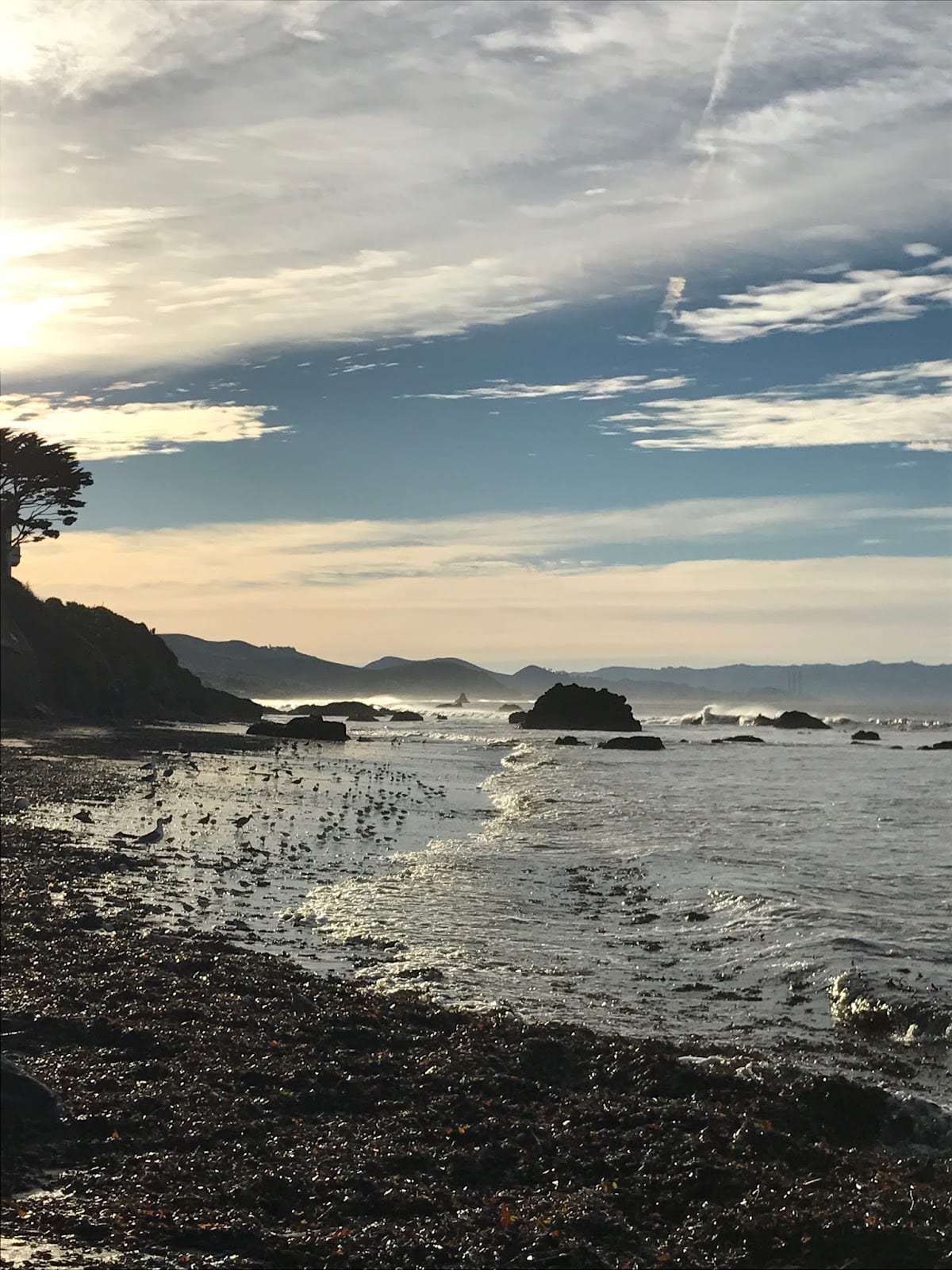
Last weekend, Lola and I traveled to the central coast of California to hang out with that tribe, my mom’s siblings and their spouses and kids. And even though Mom couldn’t be there with us, it felt like coming home. Looking around the table to see faces that are so familiar, hear laughter that I remember deep in my bones from years past, was grounding in a way I can’t really describe. I loved the opportunity to remind Lola that she is part of this group whether she wants to be or not. There is a special mix of nurturing and support, loud hilarity and not-taking-ourselves-too-seriously that has been there ever since I can remember. This group has weathered major storms over the years and come out smiling because they do it together. No matter the brand of tragedy, there is a set-your-jaw-and-roll-up-your-sleeves mentality that doesn’t back down and doesn’t forget that in the midst of all of it, there is joy to be found. This is a group that doesn’t shy away from the full range of emotions available to us (sometimes swinging from one to the other with dizzying speed), all the while holding on tightly to each and every other member of the family. And it’s a group whose definition of family extends beyond bloodlines to include others who are deeply loved and abide by the rule of having each others’ backs.

While I really wish Eve had been able to join us, I came away knowing that we will do this again soon and I’ll bring her along because I think that this is the perfect time for both of my girls to be reminded that there is a strong, smart, compassionate, funny-as-hell group of people who will always be there for them, who are rooting for them as they spread their wings and head out into the world to do whatever it is they decide to do. I know that I have always felt grateful to be able to rely on the absolute bedrock of this family to both hold me up when times were tough and make me laugh until I pee – sometimes simultaneously.

As a person who has struggled with anxiety and depression
throughout her life, perhaps choosing a career as a writer wasn’t the best way
to go. Writers, especially freelance writers, experience far more rejection
than the average person.
Fortunately, during some intense research I was doing on
adolescence and brain development, I discovered several studies on the power of
gratitude. When I was really wrestling with darkness, mornings were the most
challenging time for me. I woke up, opening one eye at a time to gauge whether
that semi-truck of pain and longing was heading for me before I swung my feet
out of bed onto the floor. Often, before I could get both eyes open, my mind
would begin to race and my heart would pound as I anticipated what the day had
in store for me. After reading about the way gratitude shifts our thinking
patterns and affects our brain chemistry, I decided to start each day with a
short list of things for which I was truly grateful. I envisioned it as a sort
of shield against that truck hurtling toward me.
In the beginning, it was often hard to come up with a list;
not because I don’t have many, many blessings in my life, but because I have an
innate tendency to qualify them. As soon as I think of one, I either compare it
to someone else and feel guilty that, say, my kids are healthy and I have a
friend whose kids aren’t – which effectively soils the gratitude – or it feels
trite and petty, like being grateful that I have enough money to pay my bills.
Even in my gratitude practice, I found myself wanting – either for more ‘pure’
things like love (which feels a little too nebulous sometimes, to be honest) or
for deep, profound items on my list that really resonated in my bones. I am
nothing if not stubborn, though, and motivated by the fervent desire to keep my
depression and anxiety at bay, I kept going despite the sometimes pathetic
nature of my lists. Every day, I thought that maybe tomorrow I could come up
with something beyond gratitude for my soft, warm bed, my kids, and my husband to
be grateful for.
When my teenage daughter was struggling with anxiety upon
starting high school, I encouraged her to start a gratitude practice to see if
it could help her. Every night before bed, I would text her three things for
which I was grateful and she would text me back right before falling asleep. My
hope was that if the last thoughts she had every day were ones that filled her
up rather than dragging her down, perhaps she would wake up with optimism for
the coming day instead of dread. Her lists began much as mine had. She was
grateful for a full belly and a soft pillow and a roof over her head. But over
time, she was able to open up and recall specific things that had happened
during the day that were positive – a friendly smile in the cafeteria, being
picked by a classmate to partner on a project because she is so organized, to
appreciating a trusting relationship with a special teacher. Her perspective
shifted over a period of weeks and she went from finding excuses to stay in bed
to getting up and tackling each new day and its challenges with a feeling of
competence and groundedness.
Over time, my definition of gratitude has developed and I’ve
come to understand what it is about this practice that has been so effective
for me. In the beginning, I often attempted to come up with things by starting
with, “at least I’m not….” What I discovered is that if I am comparing my life
to someone else’s (as in, “at least I’m not part of this oppressed group or
that oppressed group,” or thinking about all the ways my situation could be
worse such as, “neither of my kids is terminally ill and I’m not homeless,”),
I’m not really being grateful. That’s just another way my anxiety is telling me
my life could run off the rails at some point, so I should really be cautious.
Instead of helping me feel calm and centered, it is really reminding me that
one or more of those things could potentially happen and, for now, I’m just
dodging a bullet.
If I am making a mental note of the number of “good” things
in my life as compared to the number of “bad” things, that is also not helpful
gratitude. Weighing them against each other in a sort of balance sheet is not a
positive step. The fact is, both things exist simultaneously (and are often
intertwined with each other) in my life and in my mind, but gratitude is about
the ones I consciously choose to pay attention to. It doesn’t make the
challenges and difficulties in my life disappear, it simply allows me to notice
that there are many positive things in my life, too.
The human brain is wired to look for deficiencies, expect
sabotage, and find the things that need ‘fixing.’ This isn’t always a bad thing
– often I am happy to know that there is something I can do to make things
better. But unless I take the time to really engage in a gratitude practice, I
won’t notice the things that are absolutely right and lovely in the world all
around me. I might notice the pile of unfolded laundry lying on the couch, but
I can also choose to see that the dishes are all clean and the dog is fed and
happily snoozing in his bed and an essay I was working on this morning is coming
along nicely.
I am loathe to imply that gratitude is a complicated thing,
though, because when I am in the zone, it truly isn’t. When I am really tuned
in to the goodness and abundance in my life, the list of things for which I am
grateful grows quickly and easily. For me, the key to gratitude is to simplify
things. When I am frustrated and irritable, the best thing for me to do is stop
and look around. I see my computer and I am grateful for the ability to write
and connect with people who are important to me online. I catch sight of a
glass of water on the counter and appreciate clean water and a cupboard full of
dishes. I note my sunglasses on the table next to me and close my eyes and
thank goodness that I can so often feel the warm sun on my back. When I can
keep myself from trying to create stories or context, I can find simple, pure
gratitude and suddenly, there is more air in the room.

Knowing that every time I actively look for things that are
right in my life means I am activating the parts of my brain that produce
serotonin and dopamine gives me hope. When I started that gratitude practice
all those years ago out of desperation, I was beginning a process of rewiring
my brain to more easily find happiness. Sticking with it, I realized that it
does become easier over time to recognize and appreciate simple things that
give me joy. While I still struggle with anxiety (and rejection), I am more
able to see it as a part of this messy, glorious life I am living instead of
letting it keep me from getting out of bed in the morning.

I had thought that, since I lost one parent already, there would be a sense of familiarity, of deja vu, of “been there, done that” when I lost the next one. Not in a dismissive way, just an “ok, I’ve got this, I know what to expect” kind of way.

Nope.

Dad was diagnosed with lung cancer. He told me early on, I was there to listen, I went down when he had surgery to remove part of his left lung and some lymph nodes, I let him bounce ideas off of me for future treatments. We weren’t certain of the timeline, but we knew he was sick and he was absolutely honest with me about how sick he was. It was excoriatingly, skin-flayingly, teeth-grindingly painful in the last week to watch him suffer. He knew me until the minute he died in my arms.

But Alzheimer’s or dementia or whatever the hell this is that Mom has is a completely different animal. She isn’t having some diseased cells cut away. She isn’t calling me to tell me about the latest drugs or therapies her doctor has offered. She might live for six months or six years. She has no idea who I am.

This one-sided relationship is teeth-grindingly painful in a completely different way. When Dad took a turn for the worse, it was obvious. Over a period of several days, he began having pain in his legs and hips and when they took x-rays it was clear that the cancer had spread to his bones. An MRI showed it was in his brain, too – the cancer cells lit up like the night sky I once saw in the middle of nowhere, New Mexico. From that point forward, we knew there was no rallying, no bouncing back.

Mom’s slide has been gradual except when it seems to leap forward, and there have been many times over the last year when she was almost able to snap out of it and recognize me and have a conversation. The cruelest part of that is that it gave me hope. It made me wonder how we could capture those lucid moments and prolong them, whether there was some magical drug that she could take that would clear the way for a return to herself. Those moments, when they are gone, are all I can hope for and envision, but they are much fewer and farther between and I know I won’t get a signal that tells me I’ve seen the last one. I didn’t get a sign the last time I spoke to Mom on the phone that said it wouldn’t happen again. I didn’t get a warning the last time she called me by name and knew I was her daughter so that I could savor it.

There is a part of me that wonders if I am a little bit narcissistic in my grief. A part that thinks maybe it shouldn’t matter so much whether she knows who I am, that tells me to just get on with caring for her the best way I know how without worrying whether she remembers I’m hers. Because somehow, I want to be special. I don’t want to be just one of another cast of characters who comes through to visit and smile at her. I want to be her daughter, not for any sort of recognition of my efforts, but because I mean something more. There is something about the reciprocity of a loving relationship that makes it feel whole. When I sat with Dad during his last days, holding his hand and telling him stories, even though he couldn’t speak, there was a familiarity. He squeezed my hand and his eyes danced during the funny parts, and his rough, calloused thumb rubbed back and forth against mine when I was being serious. We had a history that was fully intact until the moment he took his last breath and when I grieved for him, I grieved for all of it simultaneously, the loss of his body, his Self, and our relationship.

This time, I am grieving in stages. While there are parts of Mom’s Self that are still fully intact – her sarcasm and playfulness comes out sometimes with her husband – I have lost the history of our relationship as mother and daughter. She knows I am familiar, but she doesn’t know why. Our inside jokes now belong to me, even though she is physically still here. When we sit together, I can’t tell her stories about my kids or my husband because it confuses her – she doesn’t know these people, why am I talking about them? We can’t reminisce or look forward to sharing family holidays together or significant moments in the future because she isn’t coming to my girls’ high school graduations or weddings. There is a quality of suspended animation to it all, a sense that I am walking without a foundation beneath me.

I wish I had a succinct ending to this post. I usually am able to close the loop with some sort of insight, but maybe the fact that I can’t this time is an apt metaphor for how all of this feels right now – loose and unfinished.

Yesterday, Jennifer Pastiloff’s site, The Manifest-Station, featured an excerpt of my memoir-in-progress on their site. I am thrilled to have this process begin. You can find it here. 

I can’t believe that it’s been over a month since I wrote here. Life is so full and so still, all at the same time. My daughters are continuing their inexorable shift to adulthood, the summer sun is giving way to brilliant oranges and reds in the trees while the light dims ever faster, and the house is quiet without my mostly-companion, CB. It is as though the days are pregnant with possibility and I can’t yet predict the due date. I have a completed first draft of my memoir sitting on my desktop, notes from a fellow writer scribbled in the margins. There are emails from folks interested in my other work waiting for responses I can’t bring myself to write quite yet. I voted by absentee ballot nearly two weeks ago and have sat in limbo since then, waiting for the moment someone will tally up my choices with the rest. There have been meetings about college applications for Eve and practice sessions for Lola’s upcoming band gig and it feels like the things on the calendar are both racing toward me and sitting out in the future like some hologram I can’t quite feel the edges of.

Some days, as I walk the streets of my neighborhood, I think that this must be what it feels like to float in a sensory deprivation tank. I know that there are things outside, but in this moment, I can only prepare and ruminate because it’s not quite time. I don’t feel a sense of angst or frustration about it, just an uneasy stillness. I have to remind myself that it will all unfold eventually and remaining open to the possibility and grounded at my core are the two healthiest things I can do.

When I was in junior high, we used to pass notes to each other in class – elaborately folded, origami-like things that would bloom open when you pulled a tab. The cleverness of the design was as satisfying as the note’s contents, and we had half a dozen different ways to put them together. I had a friend who was incredibly talented at folding a simple sheet of notebook paper adorned with a drawing that would show one thing when it was folded and another when it lay flat on the desk. I marveled at her skill but could not reproduce it. Trying to imagine the sequence of creases and the 3-dimensional shape of the paper was beyond my ability. I copied my friends and was able to master perhaps two of the special patterns and contented myself with crafting a funny or sweet message inside.

I feel a little like that now – unable to decipher exactly how things are wrapped up and packaged, and I am reminded that it has never been one of my strengths. Instead of picking at it or pushing myself to learn how to do it, I choose to wait until it unfolds and see what is contained within. Then, knowing that one of the things I do best is to add content, I will set about doing my part.